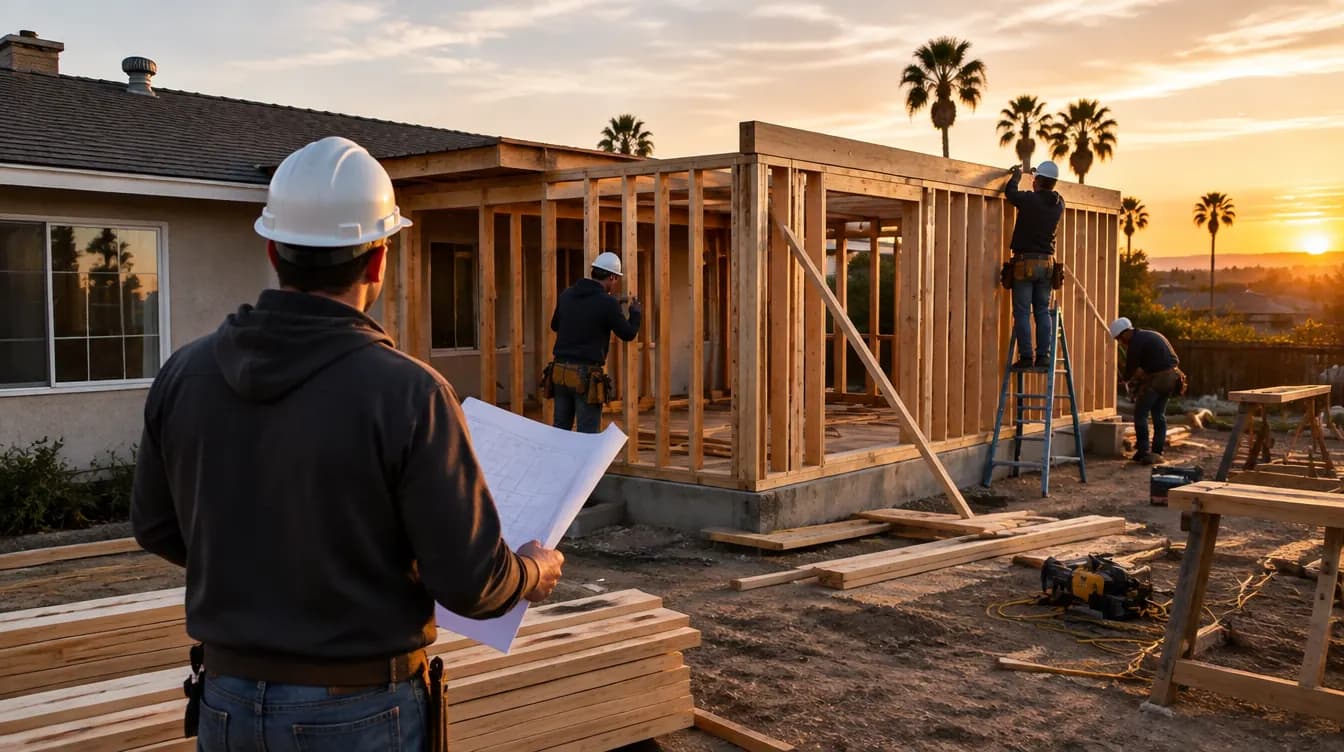


Bid lists turn GCs into a price
When an architect sends plans to several contractors, the homeowner compares totals. Your process and track record barely get a look.

Big residential projects often reach GCs through a bid list, where the total is the only thing compared. We help you meet homeowners earlier, before the plans are drawn, while they’re still choosing who to trust.
When an architect sends plans to several contractors, the homeowner compares totals. Your process and track record barely get a look.
Homeowners plan an addition from what a neighbor paid years ago. Construction costs moved on, and the first estimate lands hard.
Construction loans, refinancing, and home equity take time. A homeowner who hasn’t started that process isn’t ready to sign.
First call to plans to permits can run many months. Contractors who go quiet in that stretch get replaced by one who didn’t.
Four parts. Each one multiplies the others. Here’s where they break in your trade, and what we install.
A logo, a list of services, and “quality construction since” on every ad.
Video ads filmed across a real addition or renovation, framing to finish, with you and your superintendent explaining how you run the site.
“Send us your plans for a bid,” which invites the exact price fight you want to avoid.
A page that offers a pre-construction planning meeting, a budget estimator by project type and size, and a plain outline of design, permit, and build.
Meetings get booked with homeowners who have no plans, no budget, and no financing in motion.
Questions on plans, budget, financing, and timeline before booking, then reminders and a long follow-up sequence that tracks where they are in design.
A winter meeting turns into a contract the next fall, and nobody remembers the source.
Tracking that keeps the original ad attached through design and permitting, so you see which campaigns produced signed builds.
Film the day the addition takes shape and have the homeowner explain what they wanted the extra space for.
Make the case for bringing a GC in during design, when costs can still be shaped, instead of after the drawings are done.
Show the daily walk, the cleanup, and the schedule board, because families living in the house during a build care most about this.
Walk through one recent addition, what it included, and the range it landed in, then send viewers to price their own.
So the homeowner on your calendar already fits your jobs, your area, and your price range.
Example numbers for a general contracting business. Change them to yours.
Each lead is worth (revenue): $9,000
$180,000 project, 20% margin, 25% of leads booked, 20% of estimates closed.
See what we’d build for these numbersStarts with example numbers. Change them to yours. Arithmetic only, not a promise of results.
Local playbooks for general contractors: what’s different about each market, and what we’d run there.
Architect referrals are worth keeping. Ads add a second source where homeowners meet you before the plans exist, so you’re not only competing on bid day.
It makes them obvious. Questions about plans and budget show who wants a number to compare and who wants a builder, and your team decides which meetings to take.
As a starting range, yes. It draws on your past projects by type and size, and the page is clear that design and site conditions change the final price.
No. Your team or your architect handles design and permits. We explain your process on the page and bring you the homeowners.
Yes. We film across several visits, framing through finish, and cut the footage into ads that show how you run the whole job.
Seven questions. Two minutes. See the one part of your engine holding your projects back.
Show me where I’m losing jobsFree 2-minute assessment · No pitch, no obligationAvg response time 2.5 minutes