

Small jobs look the same online
A dead outlet, a ceiling fan, and a 200-amp panel swap all arrive as “need an electrician.” Only one of them pays for the drive.

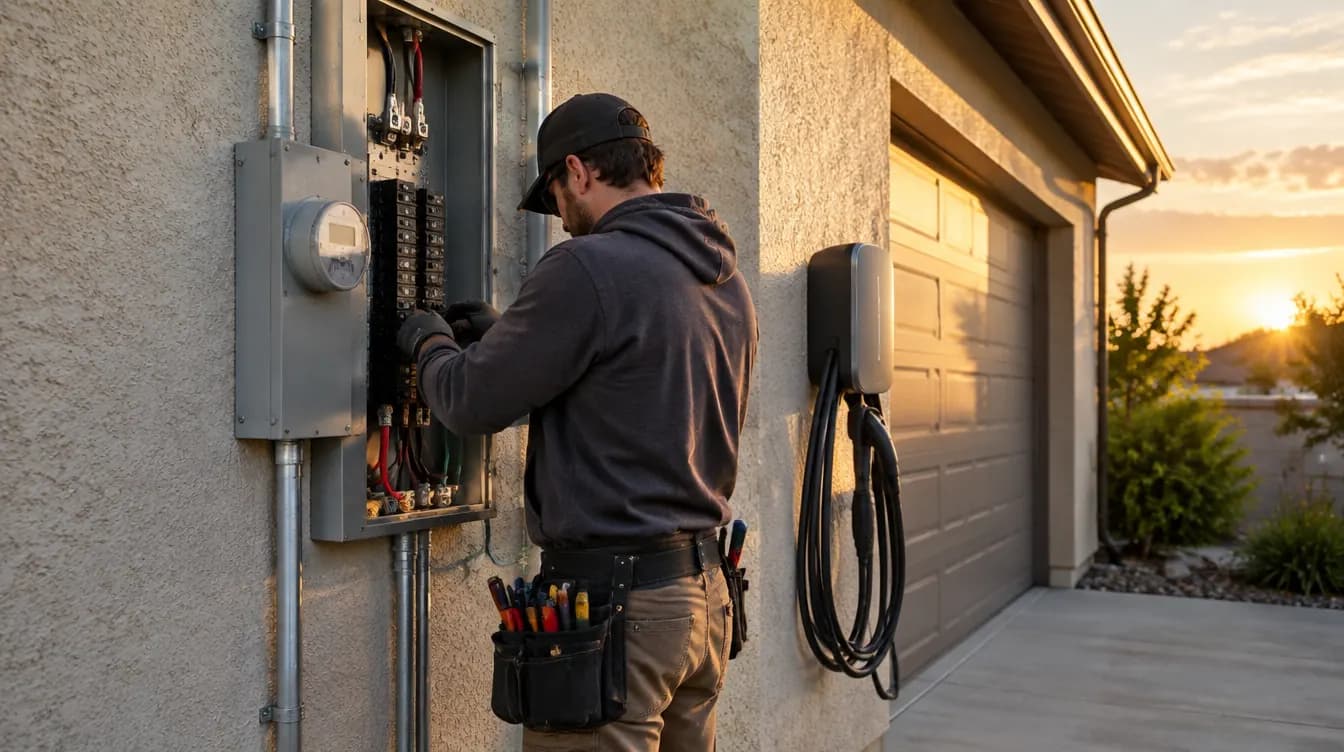
Heat pumps, EV chargers, and batteries ask more of older panels than they were built for. We reach homeowners planning that work and get them on your calendar before they call the cheapest name they find.
A dead outlet, a ceiling fan, and a 200-amp panel swap all arrive as “need an electrician.” Only one of them pays for the drive.
Service upgrades often need the utility to disconnect and reconnect power. Homeowners blame the electrician for that wait unless someone explains it first.
The panel conversation usually begins with a new car, a heat pump, solar, or a kitchen remodel. The homeowner is thinking about that, not the panel.
Unlicensed work and cash quotes make a proper upgrade look expensive. Homeowners don’t see permits, inspections, or load calculations in the number.
Four parts. Each one multiplies the others. Here’s where they break in your trade, and what we install.
Generic “licensed and insured” ads that only reach people with a flickering light.
Video ads filmed on your panel swaps and charger installs, aimed at homeowners adding an EV, a heat pump, or a battery, with your license number on screen.
A “request service” button that tells the homeowner nothing about what an upgrade involves.
Pages for panel upgrades, EV chargers, and rewires, each showing a price range, the permit and utility steps, and roughly how long the power stays off.
The quote goes out, and nobody checks back while the homeowner waits on a car delivery or a solar install date.
Booking that asks what’s driving the upgrade, reminders before the site visit, and follow-up timed around the project the homeowner is waiting on.
Service tickets and big upgrades share one total, so nobody can say what the ads actually sold.
Tracking from ad to site visit to finished upgrade, kept apart from service work, so spend follows panels, chargers, and rewires.
Talk straight to new EV owners: what a home charger needs, whether the panel can carry it, and what install day looks like.
With the power off, open a dated panel on camera and point out what your electrician checks before recommending a replacement.
Show a home taking on a heat pump, a charger, and solar, and why the panel decides how all three fit.
Film the inspector’s sign-off on your job to set your work apart from a cash-only handyman.
So the homeowner on your calendar already fits your jobs, your area, and your price range.
Example numbers for a electrical business. Change them to yours.
Each lead is worth (revenue): $1,260
$7,000 project, 45% margin, 45% of leads booked, 40% of estimates closed.
See what we’d build for these numbersStarts with example numbers. Change them to yours. Arithmetic only, not a promise of results.
Local playbooks for electricians: what’s different about each market, and what we’d run there.
The questions ask what the project is before anyone books. Small repairs can get a callback or a set service slot, and upgrade work goes to whoever quotes it.
Ad platforms limit targeting by personal details, so the creative does the work. An ad that talks to new EV owners about home charging is what pulls them in.
Yes. Homeowners handle a wait better when they hear about it before they sign. We write that section from how your jobs actually go with your local utility.
Yes. Partner referrals can land on the same project pages and booking as your own ads, so every upgrade gets tracked the same way no matter who sent it.
Seven questions. Two minutes. See the one part of your engine holding your projects back.
Show me where I’m losing jobsFree 2-minute assessment · No pitch, no obligationAvg response time 2.5 minutes